This article may contain affiliate links. If you buy through them, Naturally Beautiful Days may earn a small commission at no extra cost to you. Learn more.
Calendula officinalis, commonly known as marigold, has woven itself into the fabric of herbal traditions across various cultures for centuries. Its bright orange and yellow petals are not only a delight in the garden but have also been lauded for their potential benefits in skincare. From the ancient Egyptians to modern herbalists, calendula has been used for its soothing and healing properties.
The History of Calendula in Skincare
Historical texts like Gerard’s Herball (1597) and Nicholas Culpeper’s Complete Herbal (1653) mention calendula for its diverse uses. Gerard noted its “excellent virtues,” detailing how it could be used for wounds and skin irritation. Culpeper highlighted its ability to “open obstructions,” a phrase indicative of early attempts to understand skin ailments through a botanical lens.
Traditionally, calendula has been applied in various forms-from tinctures to infused oils. Its bright color, indicative of carotenoid content, suggested to herbalists that it could nourish the skin, a principle that resonates with the Doctrine of Signatures, which posits that plants resembling certain body parts can be used to treat those parts. Thus, the appearance of calendula’s flowers led many to believe it could assist in skin healing.
Modern Uses and Claims
In contemporary natural skincare, calendula is often found in creams, salves, and oils. It is particularly praised for its potential to soothe irritated skin, promote wound healing, and reduce inflammation. While anecdotal evidence and traditional uses abound, it is essential to ground these claims in current research and practical experience.
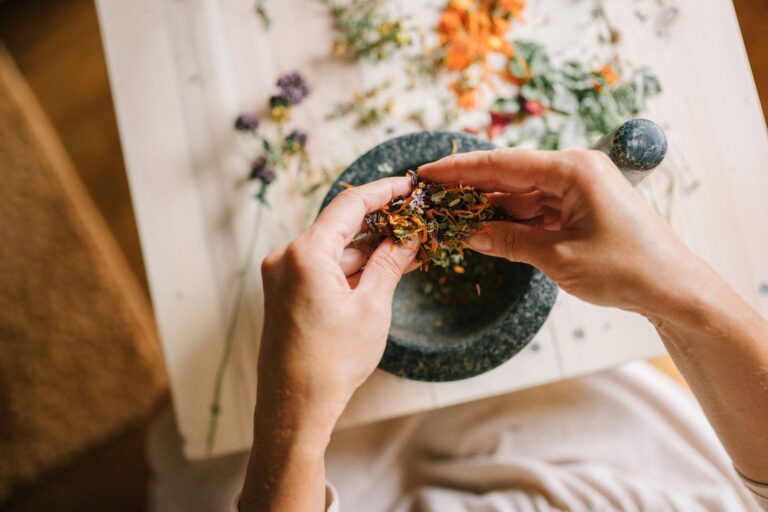
My own journey with calendula began when I decided to grow it in my garden. I was drawn not just to its cheerful blooms but also to its reputed skin benefits. After harvesting the flowers, I infused them in olive oil to create a simple calendula oil. This process, while straightforward, truly exemplified the alchemical transformation of the plant-transforming vibrant petals into a soothing oil.
What Does Research Say?
Scientific studies on calendula focus on its active compounds, such as flavonoids and saponins, which are believed to contribute to its anti-inflammatory and antimicrobial properties. A 2017 study published in the Journal of Ethnopharmacology investigated calendula’s efficacy in treating dermatitis in children, finding that it resulted in significant improvements compared to a control group. However, the evidence remains modest and should be interpreted with care.
Another study examined the effects of calendula extract on wound healing in rats, suggesting that it could enhance the healing process due to its properties. While these findings are promising, more comprehensive clinical trials are necessary to solidify calendula’s standing in dermatological applications.
Personal Testing and Observations
Throughout my testing, I applied my calendula-infused olive oil on minor cuts and scrapes, observing the healing process over a few days. The application felt soothing, and I noted a reduction in irritation and redness. However, I also recognized the limits of this oil. While it provided comfort, it did not substitute for proper medical treatment when injuries were more severe. This balance of efficacy and caution is vital when working with any botanical remedy.
Furthermore, I experimented with calendula in a cream form, blending it with shea butter and a few drops of essential oil to create a nourishing salve. This formulation was particularly beneficial during the harsher winter months when my skin often felt dry and cracked. Again, the soothing properties were evident, yet I remained mindful of the salve’s limitations-it was not a cure for severe dermatitis but rather a gentle aid in my skincare routine.
How to Use Calendula in Daily Skincare
Incorporating calendula into your skincare regimen can be an enjoyable and beneficial practice. Here are some simple methods you might consider:
- Calendula-infused oil: Infuse dried calendula flowers in a carrier oil such as olive or jojoba. Use this oil as a moisturizer or to soothe minor skin irritations.
- Calendula salve: Blend calendula-infused oil with beeswax and shea butter to create a thick salve ideal for dry patches and cuts.
- Calendula tea rinse: Brew a strong tea using dried calendula flowers and use it as a gentle facial rinse or hair rinse to help soothe the scalp.
As with any natural ingredient, it is imperative to conduct a patch test before using calendula extensively. While it is generally considered safe, everyone’s skin is different, and sensitivities can arise.
Potential Limitations and Considerations
Despite its historical and anecdotal acclaim, calendula is not a panacea. Its soothing properties are notable, yet its effectiveness can vary based on individual skin types and the nature of skin conditions. Those with sensitive skin may experience allergies or irritations; thus, caution and personal observation are paramount. Calendula is also not suitable for everyone, particularly individuals with allergies to plants in the Asteraceae family, which includes chamomile and ragweed.
Furthermore, while calendula can enhance topical healing, it is essential to acknowledge that it does not replace conventional treatments for serious skin issues. It serves best as a complementary option, particularly for minor irritations and dryness.
A Botanical Reflection
As I reflect on my experiences with Calendula officinalis, I appreciate the intersection of historical wisdom and modern understanding. The plant has a long-standing reputation, and while current evidence supports some of its uses, much remains to be explored. My garden serves as a reminder of the beauty and complexity of natural botanicals. It invites a thoughtful approach to skincare, where plants like calendula can play a role, but never a dominant one.
In conclusion, the historical use of calendula in skincare is rich with tradition and supported by a modest body of research. As I continue to experiment and learn, I find that respecting the plant’s limits while acknowledging its benefits fosters a balanced and thoughtful approach to natural beauty. Like all aspects of nature, calendula offers a gentle reminder of the interconnectedness of our health and the world around us.